
A CRM that follows your sales process
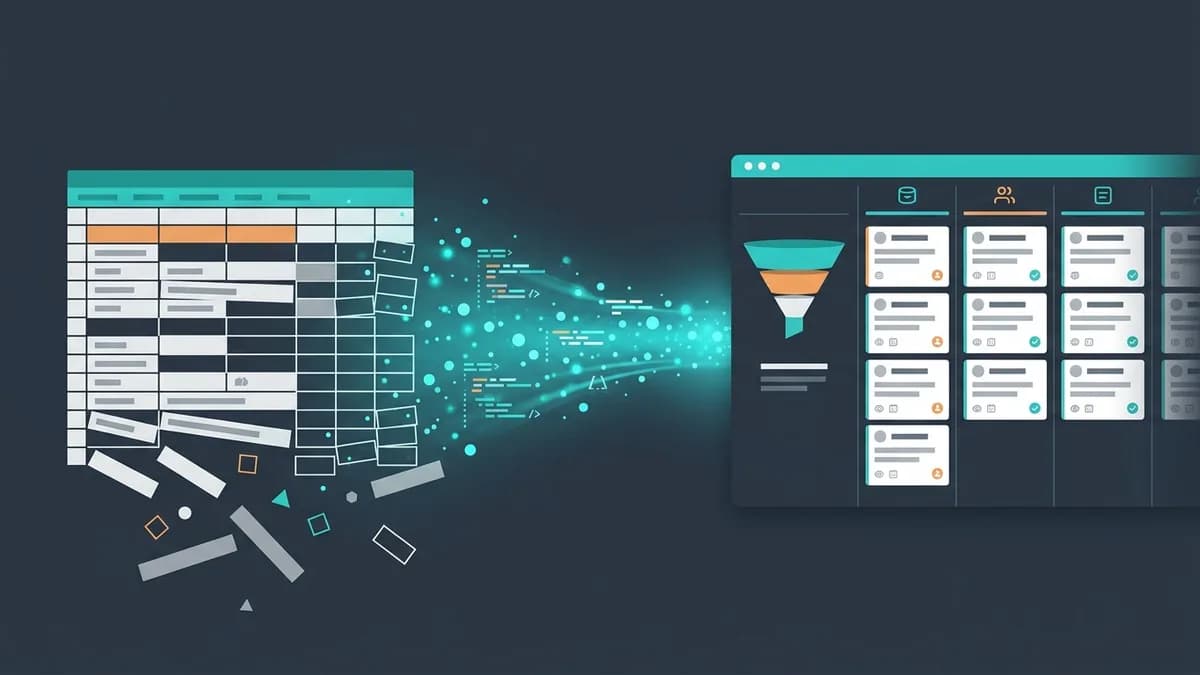
Off-the-shelf CRMs make your business adapt to someone else's pipeline. A custom one mirrors yours: deal stages, roles, reports and access rights as they really work. We start with a free clickable prototype of your pipeline in 5 days, so you click through the future system before signing anything. An MVP core with one key integration costs from $9,900 and takes 6–10 weeks; a full CRM with 8–10 modules runs $35–90K, built in stages. To be upfront: if you have a standard pipeline and up to 10–15 sales reps, an off-the-shelf CRM such as HubSpot, Pipedrive or Salesforce is cheaper. When the box stops being enough and custom pays off is covered in the FAQ below.
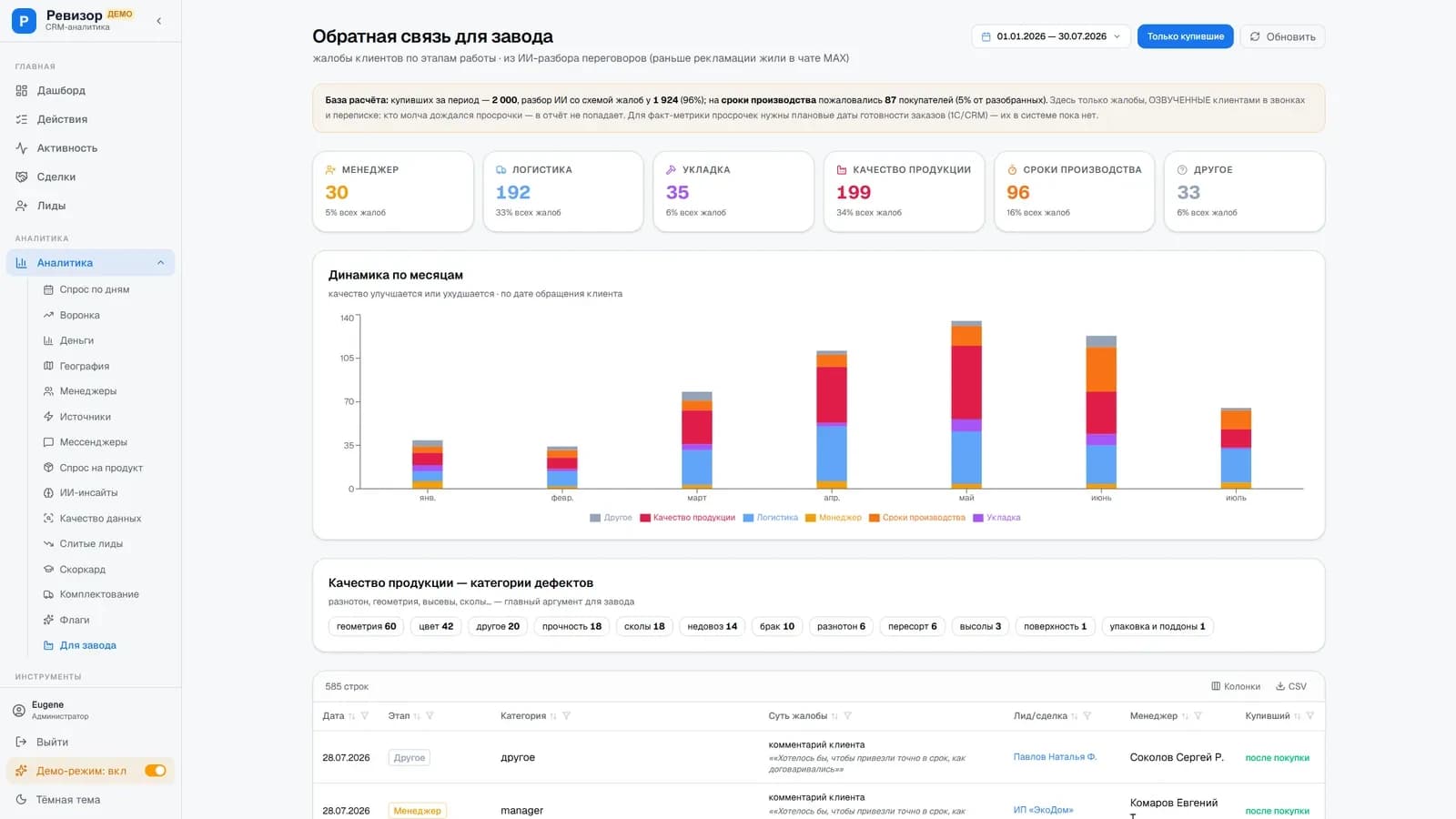
We've automated sales teams in practice, not in theory. Revizor is AI analysis of 100,000+ calls and 30,000+ deals on top of Bitrix24, built in 6 weeks. Tochka Vkhoda is AI lead qualification inside the CRM: qualification time went from 30 to 6 minutes, deal conversion rose 40%. How a CRM works alongside 1C (a popular ERP and accounting platform in Eastern Europe) and a catalog of 500,000+ items is shown in the SHATE-M case. If your deals live in spreadsheets today, start with our article on moving from Excel to a CRM, and our guide to choosing a CRM will help you weigh the options.
The CRM cost calculator estimates the budget by module, the full cost breakdown is in our article on what CRM development costs, and price ranges for all our services are on the pricing page. We also have industry write-ups: a CRM for real estate agencies, for construction companies, for logistics and for clinics. If the task goes beyond sales (warehouse, production, finance), look at ERP development. If you need to connect an off-the-shelf CRM to your accounting and phone systems without replacing it, see system integration. If the pain is an internal process rather than sales, see business process automation.