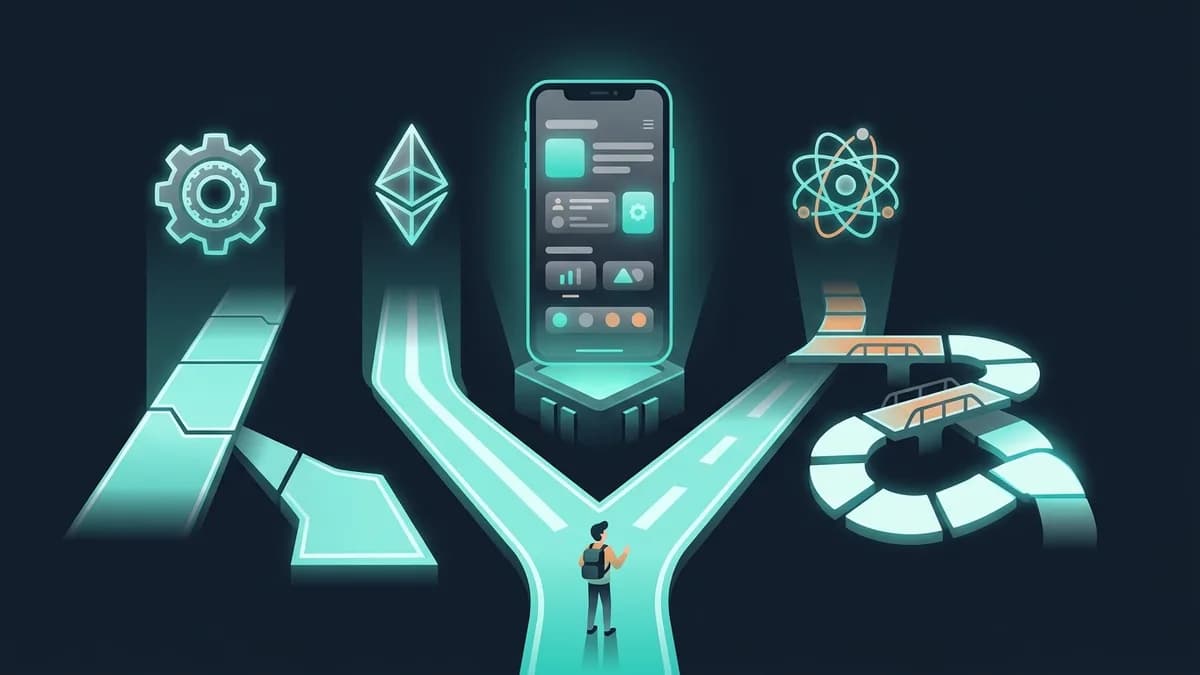

March Code
Service

Android App Development

A native Android app in Kotlin: an MVP core from $9,900 in 6–8 weeks, published on Google Play. About 70% of the world's smartphones run Android. A prototype of the key screens in 5 days, free

Demo in 3–5 daysfree, before any contract
from $9,900transparent quote
13+ yearsof founder experience · US, Europe, CIS

Free consultation · 30 minutes · No obligation

Cost
from $9,900
First step
A prototype of the key screens in 5 days, free
First paid stage
An MVP core in Kotlin: from $9,900, 6–8 weeks
  • Quote in 24 hours
  • Pay by stage
  • Your code from day one
  • Weekly demos
  • 3-month warranty
  • Contract and invoices

Telegram @marchcode · info@march-code.tech · Mon–Fri 9:00–18:00 Central European time, and on Telegram we reply outside these hours too

When it matters

Situations where we help

If you recognize even one, we can be useful

01

3,000+ Android models, and your app looks off on half of them

Fragmentation is Android's main technical headache: screens from 4.7 to 7.6 inches, Android 8 through 15, different pixel densities. Without a systematic approach to adaptive layouts, 30–40% of users see a broken UI.

02

The app drains the battery, and the rating sinks to 2.8

Unoptimized background work, wake locks, memory leaks, and Android kills the app in the background. Users see it flagged for battery drain in their settings. 68% of people will uninstall an app that drains their phone.

03

Google Play pulls your app, and the business stops

Google tightens its policies every quarter: background location access, notifications, target SDK. A single violation can get the app removed from the store within 24 hours. Getting it back takes 2–4 weeks, if it's possible at all.

04

Android is 70% of the market, but your revenue comes only from iOS

About 70% of smartphones worldwide run Android. Ignoring the platform means losing most of your potential audience, especially in B2B, logistics and field work, where Android devices make up as much as 90% of the fleet.

Let's estimate the budget for your task

Describe your task and we'll come back with a timeline and cost estimate within 1 business day. Want to see the product before the numbers? We'll build a free prototype.

Get a quote
What you get

Features and benefits

Concrete results we deliver for you

01

Kotlin + Jetpack Compose: Google's own stack

Declarative UI in Compose, coroutines for async work, Hilt for dependency injection. The code is 30–40% more compact than Java. This is the stack Google officially recommends, which gives the best compatibility with new Android versions.

02

Material You: native design on any device

Dynamic Color, adaptive icons, gesture navigation. The app adapts to the user's theme and the device's form factor. We test on 20+ models, from budget phones to flagships.

03

FCM and WorkManager: reliable background work

Push notifications via Firebase Cloud Messaging, background sync via WorkManager, tracking via foreground services. The app keeps working even under the aggressive battery savers on Xiaomi and Samsung phones.

04

Google Pay, subscriptions and deep links

Google Play Billing, promo codes, free trials. Google Pay for quick checkout. Android App Links and deferred deep links for marketing campaigns. Every step of the funnel is tuned for Android.

05

Firebase Analytics and Crashlytics out of the box

A/B tests through Remote Config without shipping an app update. Crashlytics to watch stability, Performance Monitoring to find bottlenecks. Every product decision is backed by data.

06

Tamper protection: ProGuard, Play Integrity API

Code obfuscation, encryption of local data, device integrity checks. Built with PCI DSS and GDPR requirements in mind. Root detection for fintech apps. Your data and your code stay protected.

Process

How we work

A transparent process with clear stages and deliverables

1
Stage 1

Discovery and Material You UI/UX: 1–2 weeks

We study your audience, competitors and key user flows. The design follows Material Design 3: adaptive layouts, Dynamic Color, gestures. You get a Figma prototype to test.

2
Stage 2

Development in Kotlin/Compose: 4–6 weeks

MVVM plus Clean Architecture. Daily builds through Firebase App Distribution. Unit tests and Espresso UI tests. A demo every week. An MVP core goes through the whole route in 6–8 weeks.

3
Stage 3

Integrations and optimization: 2–3 weeks

Google Pay, FCM, analytics, backend API. We optimize startup time, memory use and battery drain, then test on budget devices: the app has to fly on a Redmi Note.

4
Stage 4

QA on 20+ devices and Google Play release: 1–2 weeks

Testing on physical devices: Samsung, Xiaomi, Pixel, Huawei. App store optimization: screenshots, descriptions, keywords. Google Play review passes in 24–48 hours.

5
Stage 5

Launch and support: ongoing

Monitoring through Crashlytics and Android Vitals. Updates for new Android versions and target SDK requirements. 3 months of warranty support. Ongoing support from $2,900/month.

Cost and timeline

What it costs

You get an exact quote within 24 hours of the call

Cost
from $9,900
What's included
  • Start: a clickable prototype of the key screens in 5 days, free, before any contract
  • MVP core in Kotlin with a Google Play release: from $9,900, 6–8 weeks
  • Full app with Google Pay, offline mode and background services: $35–90K, in stages
  • Developer account, release build, store listing and policy compliance: included in the quote
  • QA on 20+ physical devices: Samsung, Xiaomi, Pixel, Huawei. The code and accounts are yours

The final cost depends on scope. We'll work it out after a short call.

Prices shown are indicative and for information only; they are not a binding offer. The final cost is set in the contract once the project requirements are agreed.

Android apps: where most of the world's smartphones are

About 70% of smartphones worldwide run Android, so for a mass-market product we often start there. We build in Kotlin and Jetpack Compose; an MVP core costs from $9,900, with a Google Play release in about 5 weeks. Publishing is part of the quote: the developer account, the release build and the store listing. We collected the stages and the pitfalls in our guide to Android app development.

When your audience is on iPhone too, we add an iOS version or go cross-platform from day one. Two native apps mean two languages, Kotlin and Swift, and that shows up in the timeline. Current budget ranges and what drives them are in our article on what a mobile app costs in 2026.

If you need both platforms at once, compare the options before you start: mobile app development from a single codebase versus two native teams, where one codebase saves 30–40%. Sometimes a Telegram service does the job instead of an app, as in our Vashi Lyudi case. For a quick estimate, try the app cost calculator.

Case studies

Real results

Projects where we applied this service

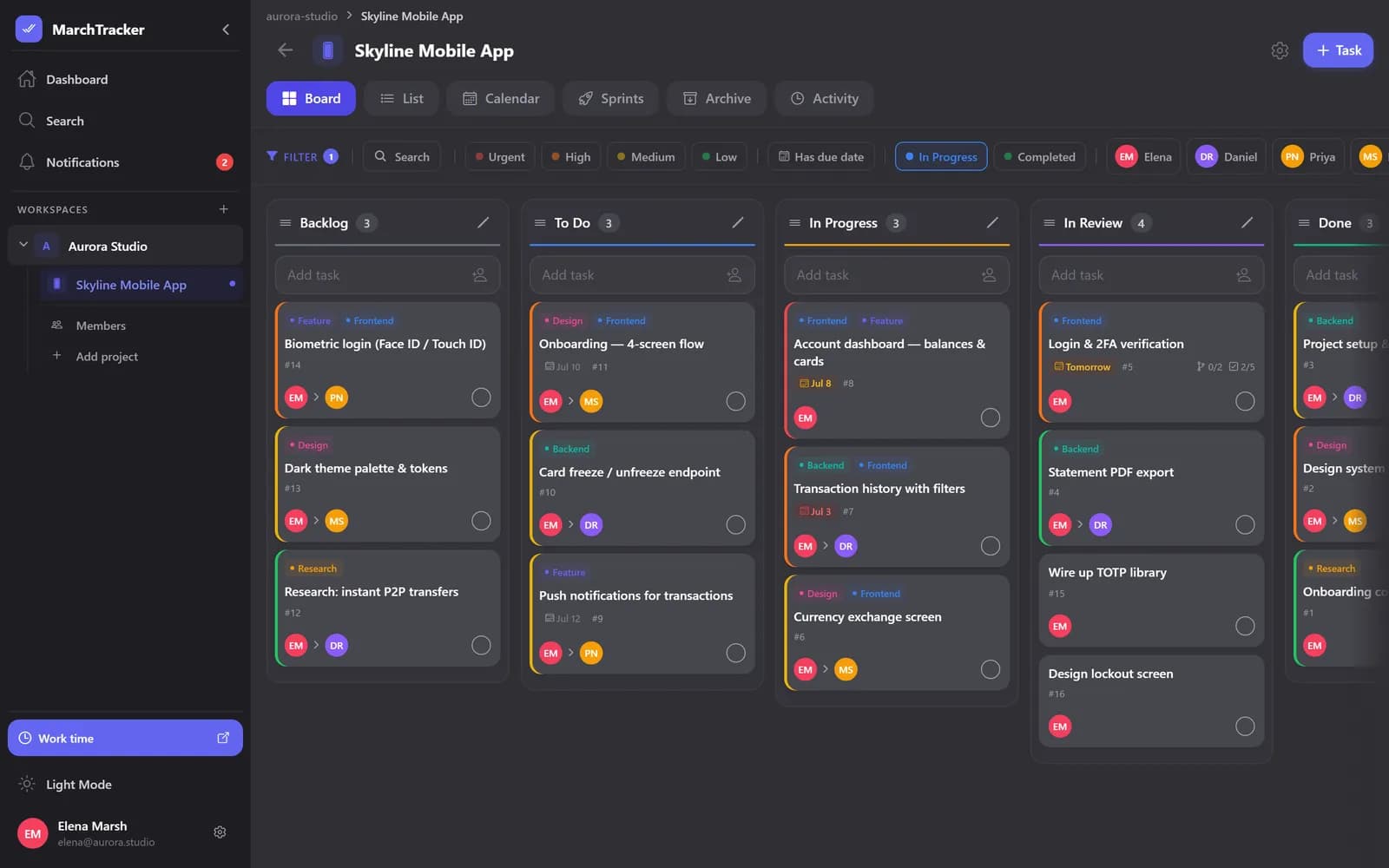
Case study: MarchTracker: A Team Task Tracker for iOS, Android and Web
3 platformsfrom one codebase

MarchTracker: A Team Task Tracker for iOS, Android and Web

Product SaaS

Plan, sprint and ship in one fast workspace. Kanban boards, sprints, a calendar, built-in time tracking and real-time collaboration: one Expo / React Native codebase and a NestJS backend.

3 platformsfrom one codebase
6 viewsof one project
Real-timethe whole team on one board
2 in 1task tracker + time tracking
Case study: ERP/FSM Platform for Managing Contractors in the US
15 minfrom request to crew assignment, down from 28

ERP/FSM Platform for Managing Contractors in the US

Contractor management

An ERP/FSM (field service management) platform for running field service crews and contractors in the US. It covers the full cycle in one window: request intake, dispatching, GPS tracking of crews, job completion control, billing and analytics. It comes with a mobile app for crews with photo reports and offline mode.

15 minfrom request to crew assignment, down from 28
since 2019platform in production
1 systemrequests, GPS, billing and analytics

«This team built a platform that holds up under 3x business growth. The dispatcher sees every crew in real time and billing runs on its own, so we no longer close the month two weeks late. The team really got the specifics of field service in the US.»

— Raz Bajwa, CEO

Case study: Gamified loyalty program in Telegram
50K+members in 6 months

Gamified loyalty program in Telegram

Retail and loyalty

A gamified Telegram loyalty service for retail chains: points, tiers, quests and prize draws inside a bot, with no separate app to install. Integration with the point-of-sale software awards points automatically with every purchase.

50K+members in 6 months
In the botpoints, tiers, quests and prize draws
At checkoutpoints are awarded automatically with every purchase
FAQ

Frequently asked questions about Android apps

Answers to the questions we hear most often

A clickable Android app prototype in 5 days, free

Kotlin MVP core from $9,900, prototype free

Prices are indicative and not a binding offer.

We build an interactive prototype of up to 5 key screens following Material 3. You open it on your own phone before any contract or prepayment.

Step 1 of 2 · Task

Keep exploring

Read next

Mobile AppsService

Mobile Apps

Custom mobile apps for iOS and Android built with React Native and Flutter. One codebase, two platforms. A clickable prototype free in 5 days, an MVP core from $9,900.

Learn more
React NativeService

React Native

React Native mobile apps: one JavaScript codebase for iOS and Android, shared with your web app, for about 40% less. A clickable prototype free in 5 days, and an MVP core from $9,900 in 6–8 weeks.

Learn more
Kotlin, Flutter or React Native: What to Build Your Android App WithArticle

Development · 16 min

Kotlin, Flutter or React Native: What to Build Your Android App With

We compare three ways to build an Android app: native Kotlin and cross-platform Flutter or React Native. Cost, timelines and performance.

Learn more
Swift, Flutter or React Native: What to Build Your iOS App WithArticle

Development · 16 min

Swift, Flutter or React Native: What to Build Your iOS App With

We compare three ways to build an iOS app: native Swift, Flutter and React Native. Cost, timelines, performance, and when to choose each one.

Learn more