March Code
Industry

Custom MES and ERP Software for Manufacturing

Custom MES and ERP for plants: production planning, maintenance, machine-vision QC, ERP integration. Pilot on one line from $14,900.

First step: a pilot on one production area, from $14,900 in 2–3 weeks. We test it on your data before any contract.

Key industry metric

When production planning lives in Excel, the schedule is out of date by lunch and machine downtime can reach

15–25%

of working time

Market data: why we took on this niche
What to know about Manufacturing

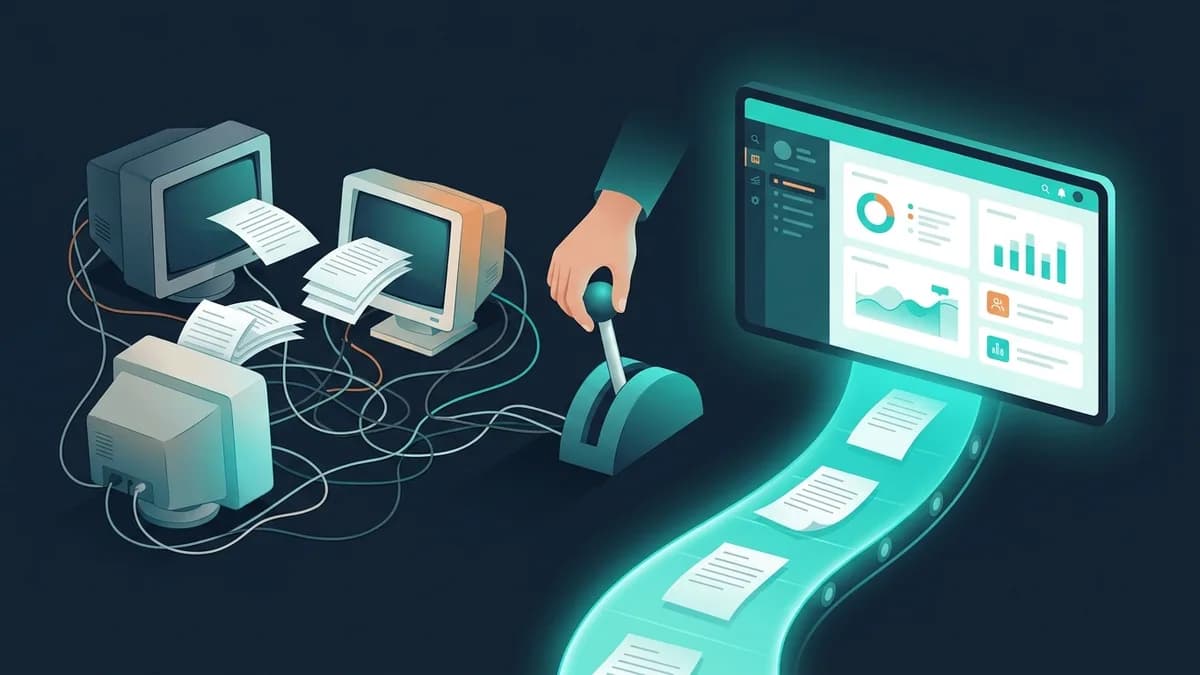
Manufacturing is going digital under the Industry 4.0 banner, but many small and mid-sized plants still plan production in Excel and log output on paper. Big ERP suites are expensive to adapt to a specific shop floor, which leaves room for custom systems built around how your plant actually runs.

We work with machine builders, food producers, metalworking and woodworking plants. Our team knows the specifics: OPC UA protocols, MQTT data buses, integration with industrial controllers (PLC/SCADA) and industrial safety requirements. We don't "install a boxed product". We build systems that fit your processes exactly.

A typical project starts with an audit of your current processes and a pilot in one shop in 4–8 weeks. You see results before scaling to the whole plant, and you decide based on data, not promises.

Context

Where the market stands

Size, digital maturity, trends and regulation: the backdrop for your business

Market size

Industrial software is a growing market in the US and Europe, driven by Industry 4.0, reshoring and labor shortages on the shop floor

Digital maturity

Low to medium. Most plants run an ERP or accounting system for finance, but few have an MES. Production tracking still lives in Excel or on paper

lowmediumhigh
Trends
  • MES for real-time shop-floor management
  • IoT equipment monitoring and predictive maintenance
  • Replacing legacy on-premise ERP: cloud ERP plus custom shop-floor modules
  • Computer vision for quality control on the conveyor
  • Robotics and integration with industrial controllers (PLC/SCADA)
Regulation
  • Workplace and machine safety: OSHA in the US, the Machinery Directive (being replaced by the new Machinery Regulation) in the EU
  • Traceability and labeling rules for regulated products (food, pharma, medical devices)
  • Public programs that co-fund digitalization for small and mid-sized manufacturers (vary by country and state)
  • Food safety for food producers: FSMA in the US, HACCP-based hygiene rules in the EU
Sound familiar?

Industry pains we take away

If you recognize even one, we have something to talk about.

01

Production planning in Excel

The shop supervisor gets orders by email and assigns them to machines by hand in an Excel sheet. When one order's priority changes, the whole schedule has to be redone. By lunch the sheet is out of date and the plan no longer matches reality. Equipment downtime reaches 15–25% of working time, and for a mid-sized plant the losses add up to serious money every year.
What we do

An MES with automatic scheduling and a Gantt chart for every machine

02

No way to know the real cost of a product

The CEO wants to know what a unit of product really costs. Accounting gives a number from the ERP, but it ignores actual material usage, machine time, downtime and scrap. Pricing decisions rely on outdated standards: prices end up 10–20% too low or too high, and you lose either margin or customers.
What we do

MES + ERP integration: automatic data collection from equipment, actual cost calculation

03

Unplanned equipment downtime

A machine breaks down mid-shift. Nobody knows until the operator tells the supervisor. The maintenance crew spends 2–4 hours hunting for spare parts. Average downtime: 6–8 hours. At a plant with 20+ machines this happens 2–4 times a month, and downtime costs 3–7% of revenue.
What we do

IoT monitoring: vibration, temperature and power sensors → predictive alerts 24–72 hours ahead

04

High scrap rates and no traceability

A customer complains about a defective batch. Finding out who made it, from which raw materials and on which machine is impossible. The investigation takes days. Scrap runs at 3–8% of output, and direct losses reach 2–5% of revenue, plus penalties for claims and lost customers.
What we do

A traceability system + computer vision that catches defects on the line automatically

05

Manual data collection for reporting

The shift supervisor writes output in a logbook. In the morning the data goes into Excel, then into the ERP. The numbers don't match. At month-end, finance spends 3–5 days reconciling. That's 80–120 person-hours a month on manual entry and reconciliation, with accuracy below 90%.
What we do

Automatic data collection through terminals and OPC UA, real-time reports

Our approach

Manufacturing: what we implement

Key areas with a clear budget, timeline and outcome. The catalog below breaks down each one.

MES (manufacturing execution system)

Planning, dispatching, output tracking and quality control in one system. A dashboard for management and terminals for the shop floor. The schedule recalculates automatically when priorities change, and you track plan fulfillment in real time.
Equipment downtime −40%Plan fulfillment 95%+Scrap −30%
Budget
from $14,900
Timeline
from 16 weeks

IoT equipment monitoring

Sensors on machines collect real-time data: vibration, temperature, power consumption. Predictive analytics warns of a breakdown 24–72 hours ahead. A dashboard with the status of every machine, event history and scheduled maintenance.
Unplanned downtime −60%Equipment service life +20%Repair costs −35%
Budget
from $9,900
Timeline
from 8 weeks

Quality control (computer vision)

Cameras on the conveyor, a neural network that detects defects, automatic rejection. Statistics by defect type and correlation with process parameters. The system learns from your production data and keeps improving.
Defect detection 99.5%+Inspection speed 0.1 s per itemDefects reaching customers −80%
Budget
from $7,500
Timeline
from 8 weeks

ERP integration with the shop floor

Automatic data exchange between your ERP and actual production: orders, output, material consumption, cost. Manual data entry drops by 90%, and reports take minutes instead of days.
Manual data entry −90%Accounting accuracy 99%+Reports in minutes instead of days
Budget
from $14,900
Timeline
from 8 weeks
200,000+

Pallet scans with no manual entry (ProControl case)

14ms

To detect a defect on the conveyor (ProControl case)

−30–60%

Defects reaching the customer

2–3weeks

To a pilot on one line

What happens in the first two weeks

You can test us for free, before you pay a cent. It works the same way for any task in Manufacturing.

  1. Day 0

    A 30-minute conversation

    We go through the process that hurts most and name the budget range out loud. No money changes hands at this step.

    1
  2. Days 1–5

    A working demo on your task

    Not a slide deck: a clickable prototype or a live bot you can open on your phone and show your team. If you don't like it, we part ways and you keep the materials.

    2
  3. Day 2 after the brief

    A fixed quote by stage

    Fixed in the contract. Not “approximately” and not “we'll clarify as we go”.

    3
  4. Weeks 2–4

    The first paid stage

    You pay for a specific result. The next stage doesn't start until you've accepted the previous one.

    4
  • Demo before any contract or prepayment
  • The quote is fixed in the contract
  • Payment in stages, not all at once
  • Code in your repository from day one
  • 3 months of warranty after launch
  • We'll tell you when you don't need it
FAQ

Frequently asked questions

The essentials about working in this industry, short and to the point

We don't sell "the whole project" up front. We sell steps, and you can stop at any of them. Each one gives you a working tool.

  • A demo on your task: free, 3–5 days. A clickable prototype or a working bot before any contract or prepayment.
  • Your first tool: a chatbot built around your scenario, from $1,900 in 2 weeks.
  • Production reporting automation: from $9,900.
  • AI in manufacturing: from $14,900.
  • Mobile app for manufacturing: from $16,900.

A full setup with every module and integration adds up to $35–90K, but you never pay it in one go: you pay in 2–4 week stages, each for a concrete result. The quote is fixed in the contract within 24 hours of our call.

For comparison: one in-house developer costs from $10,000/month with taxes, and you still have to find one.

Keep exploring

Read next

ERP systemsService

ERP systems

We build an ERP for your production module by module: warehouse, MRP planning, cost accounting, finance, with two-way sync to your accounting system. The first module from $14,900 in 6–8 weeks; a process map and a module prototype free in 3–5 days.

Learn more
IntegrationsService

Integrations

We connect the systems you already run: your ERP or accounting system, CRM, website, phone system and marketplaces exchange data on their own, and managers stop re-typing orders and stock by hand. One integration from $4,900 in 2–3 weeks, a free integration map in 3–5 days. We don't touch your ERP's core.

Learn more
Business Automation: Where to Start and How Much It CostsArticle

Automation · 15 min

Business Automation: Where to Start and How Much It Costs

A practical guide: which processes to automate first, what it costs and how to calculate the ROI. No fluff, just specifics.

Learn more
Automation ROI CalculatorCalculator

2 minutes · free

Automation ROI Calculator

See how much money you lose on manual processes: estimate your team's hours, the volume of operations and the cost of errors. Get the automation payback period in months and your annual savings.

Learn more

Ready to automate your production?

Name one process that currently runs on people and paper. In 30 minutes we'll go through it, in 2 days you'll get a fixed quote, and in 3–5 days a working demo on your task. Free, before any contract or prepayment.

First step: a pilot on one production area, from $14,900 in 2–3 weeks. We test it on your data before any contract.

A process map and a prototype of your first ERP module in 3–5 days, free

Map and prototype free · first module from $14,900

Prices are indicative and not a binding offer.

On a 30-minute call we find where the business is losing money and build a clickable prototype of one module: warehouse, production or purchasing. Judge it before any contract or prepayment.

Step 1 of 2 · Task

30 minutes · free · no obligation