Three modules, three sales scenarios
Photo-vis
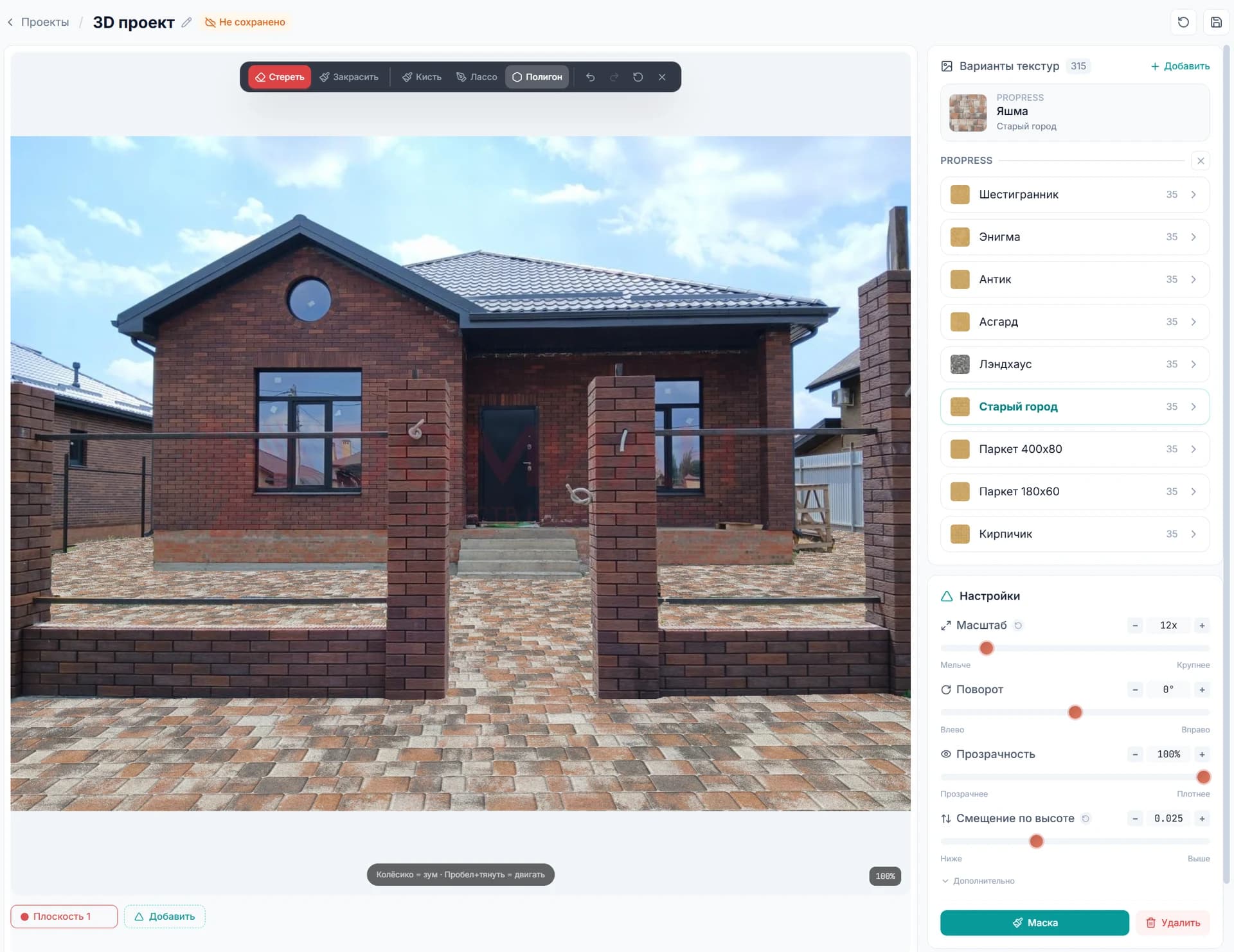
AI finishes on a photo
- Photo of the property → mask with a brush → texture from the catalog
- Generation with Google Gemini or OpenAI gpt-image
- Several variants in a single batch run
MR-vis · Quest 3
Try-ons in a headset
- Native Meta Quest 3 app (OpenXR)
- Finishes on real walls in mixed reality
- The catalog syncs with the web account
MR-projects
Tours of future apartments
- 3D models of buildings and apartments (GLB)
- VGGT: a 3D scene from a set of photos
- The buyer “walks” through the apartment in a headset
From photo to photorealism in four steps
Photo
Drag&drop, paste from the clipboard or take a shot with the camera
Mask
Brush, eraser and fill to mark the finish area
Texture
From the manufacturer's catalog or a text description
Result
Download it, add it to a client proposal or make a QR code for the showroom
Not just a generator, but a sales system
Results are collected into a sales proposal with a shareable link: the client views the options without signing up, likes and comments on them and leaves a request, while the sales rep sees the reaction and gets a lead. The platform also has multi-tenancy for dealer networks (manufacturer → distributor → dealer), a materials catalog with Excel import, and subscriptions with payments via Robokassa (a Russian payment gateway), including automatic invoices and closing documents.
Under the hood: NestJS 10 + PostgreSQL (118 migrations), Redis/Bull queues for batch generation, a Three.js surface editor, a VGGT 3D reconstruction service and a native Meta Quest 3 app with Device Code sign-in. 118,000+ lines of production TypeScript code.