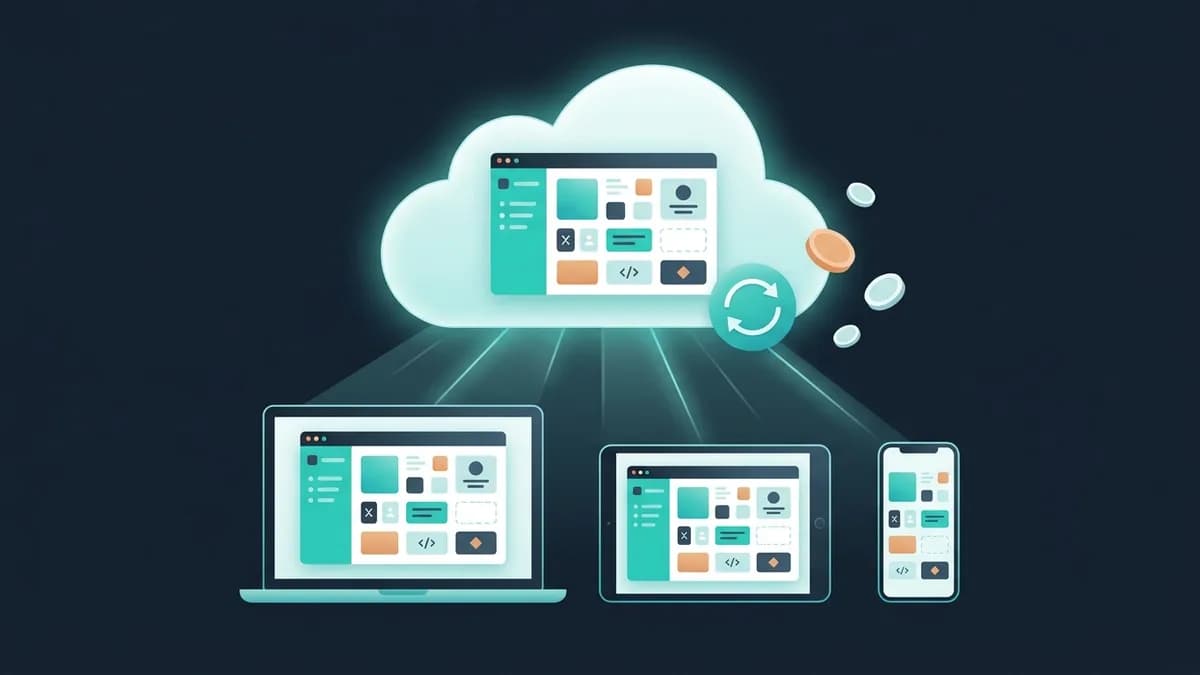

Building a SaaS product from scratch in 2026 costs from $19,900 for an MVP with subscriptions and billing (scope and prices are on our SaaS development page), and the launch takes 8–12 weeks. This guide covers the whole path: validating the idea, scoping the first version, multi-tenant architecture, taking payments, and the metrics that tell you the business is alive.
SaaS is the most scalable model in software: build it once, sell it a thousand times. But between “an idea for a service” and “a working subscription business” there's a gap that swallows 90% of startups every year. Not because they wrote bad code. Because they thought about the product the wrong way.
This guide is for people who want to launch a SaaS product without spending a year on something nobody needs. From validating the idea to setting up subscription billing, with real numbers, common mistakes and the fixes for them.
paying customers
never reach product-market fit
Step 1: Validate the idea (before the first line of code)
The biggest mistake: “I need this, so everyone needs it.” No. Your experience is a hypothesis, not a fact. Test it before you've spent $19,900 on development. That's exactly what a short MVP is for.
Three validation questions
1. Who pays? Not “who uses it” but “who pulls out the card.” In B2B SaaS these are often different people: a manager uses the product, a director makes the decision, accounting pays. All three have to be happy.
2. What do they pay for? Results, not features. “A CRM with 50 features” isn't value. “Managers stop losing leads and conversion grows by 20%” is. Put your value proposition into one sentence.
3. Why will they pay you and not a competitor? Because you're cheaper? Bad answer: someone will always be cheaper. Because you're simpler? Better. Because you solve a narrow problem in depth? Great. Because you integrate with tools your competitors don't? Perfect.
How to validate in practice
Rule of thumb: if you can't collect 100 email addresses from interested people in 2 weeks with a $1,500 ad budget, rethink the idea. That doesn't mean the idea is bad: maybe you're framing it wrong or targeting the wrong people. But starting development without validated demand is burning money.
Step 2: SaaS product architecture
A SaaS product isn't an ordinary web app. It has specific architectural requirements that have to be built in from day one. Reworking the architecture once you have 1,000 customers costs 10 times more than getting it right at the start.
Multi-tenancy
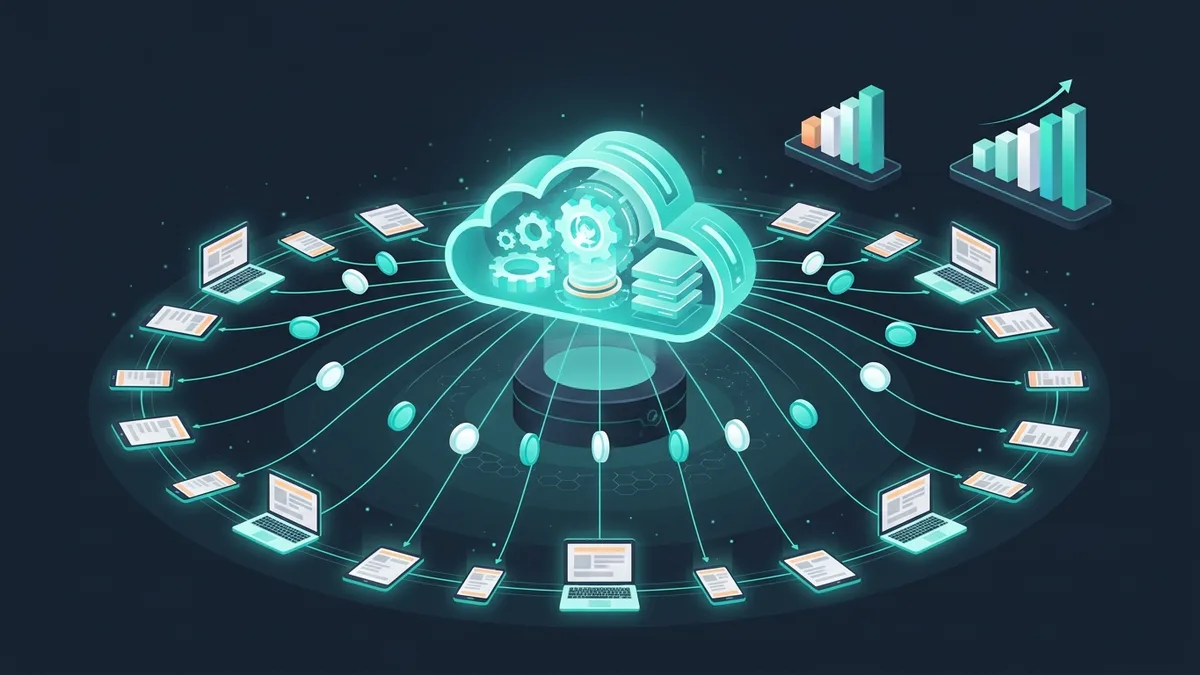
The main architectural question: how do you isolate the data of different customers (tenants)?
Shared database, shared schema (one database, one schema, a tenant_id in every table). The cheapest option. Perfect for an MVP. At 10,000 customers it starts to slow down. Cost: minimal.
Shared database, separate schema (one database, a separate schema for each customer). Better isolation, but migrations and backups get harder. For B2B products with security requirements.
Separate database (a dedicated database for each customer). Maximum isolation, but expensive to maintain. For enterprise customers and regulated industries.
For an MVP, start with a shared schema + tenant_id. That covers your first 500–1,000 customers. When (and if) you hit scaling problems, you migrate. 95% of SaaS startups never get that far, so overengineering at the start is a waste of resources.
Key architectural components
Authentication & Authorization. SSO (Single Sign-On), OAuth2, multi-factor authentication. Roles: Owner, Admin, Member, Viewer. Team invitations by email. Don't build it from scratch: use Auth0, Clerk or Supabase Auth. Cost at the start: free tiers, then up to a few hundred dollars a month.
Billing & Subscriptions. Subscription billing: plans, a free trial, upgrades and downgrades, cancellations, refunds. Stripe or PayPal to take payments. Integration cost: $2,500–6,500. Don't automate billing for your first 10 customers: invoice them by hand. Seriously.
API-first architecture. Every feature is available through an API. This isn't optional, it's a requirement: customers will want to connect your SaaS to their own systems. An API also lets you build a mobile app, widgets and third-party integrations.
Analytics & Monitoring. For you: Sentry (errors), PostHog (product analytics), Grafana (infrastructure). For customers: dashboards with their own data. Cost at the start: mostly free tiers, up to a couple hundred dollars a month.
Recommended SaaS stack in 2026
Frontend: Next.js (React) or Nuxt.js (Vue). Next.js is the de facto standard for SaaS: SSR, API routes, middleware, a great ecosystem.
Backend: Next.js API routes for simple cases; a separate NestJS or FastAPI (Python) service for complex business logic.
Database: PostgreSQL. For an MVP there's no real alternative. Add Redis for caching when you need it.
Hosting: Vercel (frontend) + Railway/Render (backend + database) at the start. AWS/GCP once you scale.
More on picking technologies in our article on how to choose a tech stack.
Step 3: An MVP is the minimum that works
A SaaS MVP isn't “a product with 3 features instead of 30.” It's the smallest set of features a customer is willing to pay for. If nobody pays for your MVP, it isn't an MVP. It's a demo.
What goes into a SaaS MVP
What an MVP costs
Simple SaaS ($19.9K–$35K). One core feature, 2 plans, a landing page, onboarding. Examples: a single-purpose SaaS tool (a timer, a habit tracker, a form builder). Timeline: 2–3 months.
Mid-size SaaS ($35–90K). 3–5 features, team collaboration, integrations (2–3 APIs), dashboards, a mobile-friendly interface. Examples: a niche CRM, an analytics tool, an HR platform. Timeline: 3–5 months.
Complex SaaS ($90–170K). A platform with marketplace elements, real-time collaboration, AI features, a mobile app and an API for third parties. Timeline: 5–8 months.
We covered our approach to MVP development in detail in a separate article.
Step 4: Subscription model and pricing
Pricing isn't “I'll check the competitors and go 20% cheaper.” Pricing decides which customers show up, how fast you grow and whether you survive at all.
Pricing models
Per user. Slack, Notion, Jira. Transparent, easy to understand, grows with the customer. But large customers will cap the number of seats, so you won't get full penetration.
Per feature (tiers). Basic / Pro / Enterprise. Freemium → paid upgrade. A good fit for horizontal SaaS with different types of users.
Usage-based. AWS, Twilio, OpenAI. Customers pay for what they use. Ideal for API products and infrastructure services. Revenue is harder to forecast.
Flat rate. One price for everything. Basecamp: $299/month for everything. Simplicity is the main advantage, but it caps ARPU growth.
How to set your price
The 10x rule. Your SaaS should bring the customer 10 times more than it costs. If you save a customer $50,000 a year, charge $5,000 a year. That's not greed, it's a sustainable business: the customer is happy (10x ROI) and you make money.
Don't price too low. A $9/month SaaS attracts bargain hunters: high churn, lots of support tickets, low LTV. A $99/month SaaS attracts businesses that value their time and will pay for a solution. Margins are higher and support takes less work.
If no customer complains about the price, you're selling too cheap. If everyone complains, it's too expensive. The sweet spot: 20–30% of prospects say “a bit pricey, but I see the value.”
Step 5: SaaS business metrics
A SaaS without metrics is a plane without instruments. You're flying, but you don't know where to or how much fuel is left.
5 key metrics
MRR (Monthly Recurring Revenue). The foundation of everything. MRR = number of paying customers × average ARPU. MRR growth above 15% month over month is an excellent pace for an early-stage SaaS.
Churn rate. The share of customers who cancel their subscription in a month. For B2B SaaS, 2–5% a month is normal. Above 7%, the product isn't keeping people. Below 2%, you're in the elite. Revenue churn (how much money you lose) matters more than customer churn (how many customers leave): one enterprise customer at $10,000 a month equals 100 customers at $100.
CAC (Customer Acquisition Cost). What it costs to win one paying customer: the whole marketing budget plus sales salaries, divided by the number of new customers. For a healthy SaaS, CAC < 3x MRR (the customer pays back within 3 months).
LTV (Lifetime Value). How much a customer brings in over their whole lifetime. LTV = ARPU / churn rate. For a healthy SaaS, LTV / CAC > 3. If LTV/CAC < 1, you lose money on every customer.
Activation rate. The share of sign-ups who “activate,” meaning they complete the key action. For Slack, that's a team sending 2,000 messages. For your SaaS, define your own “aha moment.” Normal: 20–40%. Below 15% points to an onboarding problem.
Step 6: Growth and scaling
The MVP is live and the first customers are paying. What's next?
Product-Led Growth (PLG)
The product sells itself. A user signs up, tries it, gets value, pays and invites colleagues. No salespeople, no demos, no “leave a request and we'll call you back.” Examples: Slack, Notion, Figma.
PLG needs a free or freemium plan, self-serve onboarding (no help from support), a viral loop (team invites, sharing) and a fast time-to-value (value in minutes, not days).
Sales-Led Growth
For expensive B2B SaaS ($1,000+ a month per customer). Salespeople run demos, negotiations and customization. The sales cycle is long (1–6 months), but the deals are big.
Content-Led Growth
Blog, SEO, webinars, documentation. A long game (6–12 months before you see results), but the cheapest channel over time. CAC through content typically runs about 5 times lower than through paid ads.
Common mistakes when building a SaaS
Mistake 1: “Product first, customers later”
It works the other way around: first 10 customers who are ready to pay, then the product. Find people with the problem, sell them the solution (before any code exists), build it for them. That's not a scam, it's lean startup.
Mistake 2: Too many features in the MVP
Every extra feature means +2–4 weeks of development, +$1,500–6,500 of budget and support forever. 90% of the features in your backlog aren't needed by 90% of your customers. Launch with the minimum and add features when real (paying) users ask for them.
Mistake 3: Ignoring churn
Acquiring a new customer costs 5–7 times more than keeping an existing one. If churn is above 5% a month, no amount of marketing will save you: you're filling a leaky bucket. Plug the hole first (find out why people leave), then pour (bring in new customers).
Mistake 4: Wrong pricing
The most common mistake is pricing too low. A $19/month SaaS with a $100 CAC doesn't add up. To pay back acquisition in 5 months (at 5% churn), the average customer has to stay 5 months, which gives an LTV of about $95. Margin: roughly zero. Raise the price to $59 and the math starts working.
Our approach: SaaS development from $19,900
At March Code we build SaaS products on Next.js + PostgreSQL + Prisma. We help with more than code: product strategy, pricing, metrics and an architecture that scales.
FAQ
Can I launch a SaaS alone, without a team?
Yes, if you're a developer. Indie SaaS (solo founders) is a whole movement. The 2026 toolset (Next.js + Supabase + Vercel + Stripe) lets one person launch a SaaS in 1–2 months. But marketing, support and sales are on you too. Realistically, you can get to around $10K MRR on your own; beyond that you need a team.
SaaS or custom development: which is the better business?
Custom development brings revenue from the first month, but the model is linear (income = hours billed). SaaS takes 6–18 months to reach profit, but the model is exponential (income grows without a matching increase in costs). If you have a 12–18 month runway, go with SaaS. If not, start with custom development and build your SaaS on the side.
How do I protect a SaaS from being copied?
Code can be copied. What can't be copied: data (your SaaS knows the customer's habits), integrations (50 integrations = 50 barriers for a competitor), community (active users, discussions, templates) and brand (trust). The best protection is iteration speed: while a competitor copies v1, you're already on v3.
How many customers does a SaaS need to become profitable?
It depends on your price and costs. The formula: fixed costs (salaries + infrastructure + marketing) / (ARPU − variable costs per customer). With fixed costs of $50,000 a month and an ARPU of $500, breakeven is 100 customers. With an ARPU of $3,000, it's 17 customers. That's why high-ticket B2B SaaS is more profitable than mass-market B2C.
Should I use no-code for a SaaS?
For validation, yes (Bubble, Webflow + Memberstack). For a production SaaS, no. The limits: performance, scalability, customization, vendor lock-in. A no-code SaaS with 500+ users starts to slow down, and migrating to code costs more than starting with code would have. Use no-code for a prototype (1–2 weeks, $0), then move to code.
How long should the free trial be?
14 days is standard for simple SaaS products (time-to-value under 1 day). 30 days for complex B2B SaaS (it has to be set up, integrated and the team trained). Offer a free plan (freemium) instead of a trial if your SaaS supports PLG and viral growth. Don't make free access unlimited: people don't value what they get for free.