
Updated: October 2026
Telegram Mini Apps are full web apps inside the messenger: a store with a cart, bookings with a calendar, an account area with order history. The user installs nothing: the app opens with one tap from a chat. A turnkey storefront costs from $4,900 and takes 3–4 weeks to build.
What a Mini App is and how it differs from a bot
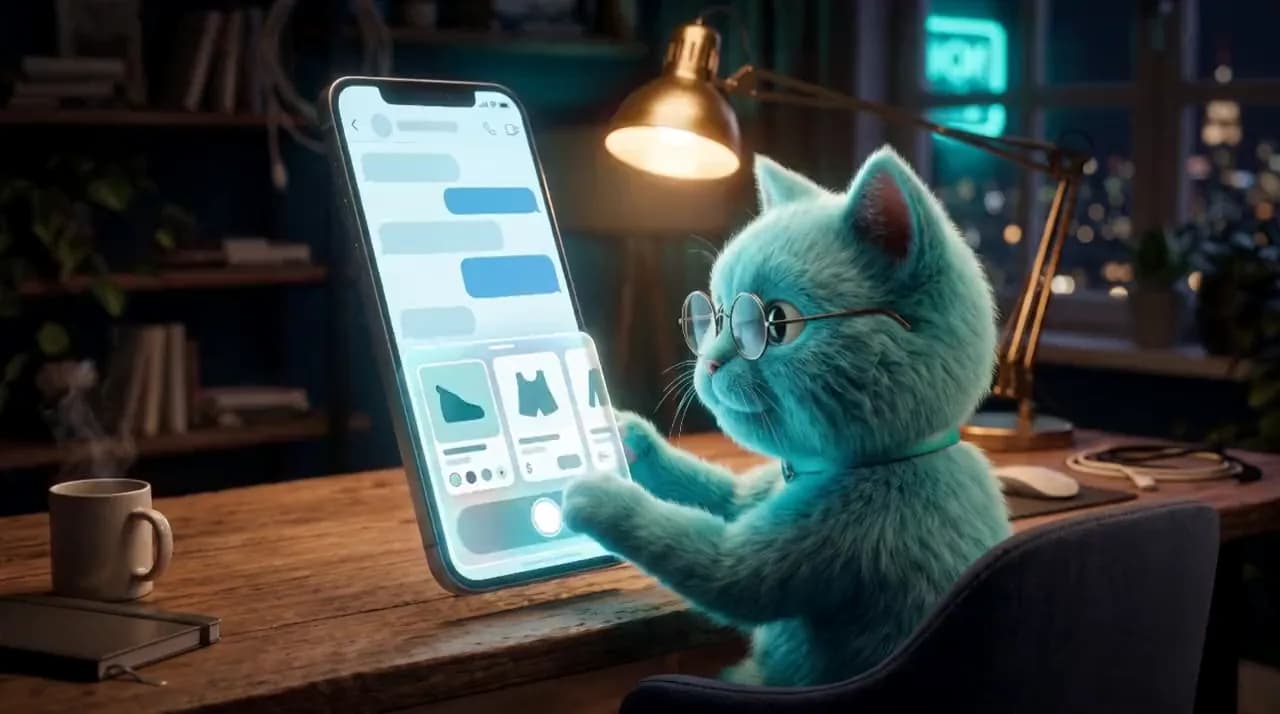
A bot talks in messages and buttons: a dialog, branches, commands. A Mini App opens a real interface on top of the chat, with a catalog, filters, a map and payments. The simplest way to think about it: a bot is a conversation, a Mini App is an app that doesn't need the App Store.
Technically, it's a web app that Telegram displays inside itself and passes the user's data to: name, language, color theme. That gives you the main advantage: zero barrier to entry. The user doesn't download an app, doesn't register and doesn't have to remember a password. They're already signed in with their Telegram account.
What business tasks a Mini App handles
What development costs
| Scope | Price range | Timeline |
|---|---|---|
| Storefront: catalog, cart, order request | $4.9K–12K | 3–4 weeks |
| Store with payments and an admin panel | $12–20K | 5–8 weeks |
| Bookings with a calendar and CRM | $8–15K | 4–6 weeks |
| Account area integrated with your accounting system or CRM | $13–27K | 6–10 weeks |
The price depends on the same factors as any software project: the number of screens, integrations with your systems and payment processing. Compared with a classic mobile app, you save two to three times: no separate iOS and Android versions, no app store publishing, and no store commissions on payments for digital goods.
If your audience already messages you on Telegram, a Mini App is almost always a better deal than a mobile app. If your audience comes to your website from search and ads, start with a website and a bot, and add a Mini App once your channel has enough subscribers for at least a thousand active conversations a month.
When you don't need a Mini App
An honest list, so you don't waste your budget:
Questions, answers and requests with no catalog: a scenario bot for $1,900 is enough, and an interface for three buttons won't pay off. Your audience isn't on Telegram: if customers come from search, build a web app. You need the camera, background location or offline mode: that's the territory of native mobile development, because a Mini App has limited access to device features.
How to launch in four steps
1. Scenario. One user path to a result: choose → pay → get a confirmation. Anything that doesn't lead to the result waits for version two.
2. Prototype. Clickable screens in your own Telegram, before any contract or prepayment. We build a prototype like this for free in 5 days.
3. Development and integrations. Storefront, payments, a connection to your CRM or accounting system, a content management panel. 3–8 weeks depending on scope.
4. Launch and first conversations. A menu button in the bot, a link in your channel and on your website, a QR code offline. For the first two weeks we watch where users stumble and fix the leakiest step.
FAQ
How is a Mini App different from a regular website?
Technically it is a web app, but one that opens inside Telegram, with sign-in, payments and push notifications through the chat already built in. The user doesn't need to remember a URL, a login or a password: they're already signed in with their account.
Can it take payments?
Yes, in two ways: by bank card through connected payment providers (for physical goods and services) and with Telegram Stars (for digital goods). Receipts and taxes follow the usual rules for your business.
Does a Mini App need a separate bot?
Yes, the app lives “inside” a bot, which serves as the entry point and the notification channel. That's usually a plus: the bot warms up subscribers with broadcasts, and the Mini App closes the sale. We broke down what the bot itself costs in a separate article on Telegram bot pricing.
Mini App or mobile app: which should I choose?
A Mini App if your audience is on Telegram and you need a fast start without the app stores. A mobile app if you need deep device features or your audience expects to find you in the App Store and Google Play. The budgets differ many times over: $4.9K–20K versus $35–90K for a pair of native apps.
Scope of work, examples and price ranges are on our Telegram Mini App development page. We build a prototype in your own Telegram for free in 5 days, so you see the app before signing a contract.